Category: Article
-
Understanding and overcoming “resistance to change”
Understanding and overcoming “resistance to change” As the new year begins and we look ahead to the changes that await us at the Laboratory, we may find ourselves feeling a mixture of enthusiasm and fear of the unknown. You may have heard the term “resistance to change”, which is usually defined as a natural human
-
Practice responding instead of reacting
Practice responding instead of reacting In this age of instant communication, we tend to react immediately to any situation without taking time to assess what is at stake for all concerned, the emotions triggered and the long-term consequences for working relationships. In my work as Ombud, people often ask me about written communication, especially e-mails,
-
Proactively tackling conflicts
Proactively tackling conflicts Conflict resolution in the workplace takes time, good listening skills and a willingness to find solutions Taking the time to listen to all parties concerned and to hear everyone’s point of view allows the mediator to better understand the situation. Active listening allows the different parties to tell their side of the
-
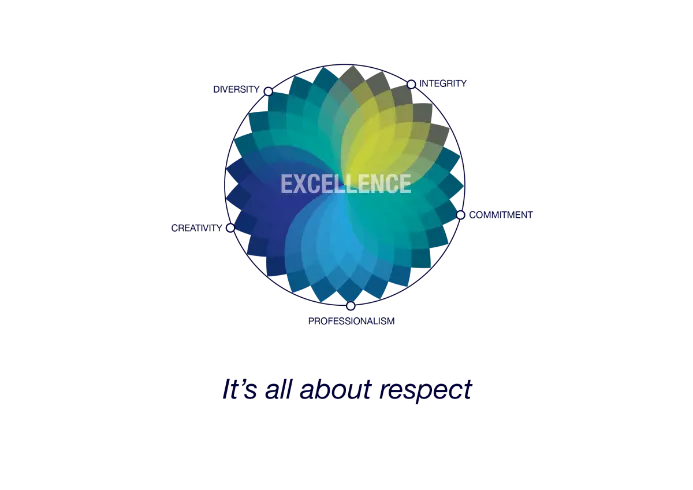
Three life skills are essential at CERN: politeness, respect and gratitude
Three life skills are essential at CERN: politeness, respect and gratitude “He doesn’t even say hello to me anymore.” “She doesn’t listen to my opinion.” “Whatever I do, it’s not enough.” I often hear these kinds of emotionally charged complaints, with people feeling that their very identity is at stake. Hence the idea for this
-
When disagreements or conflicts arise – don’t let them get out of control
When disagreements or conflicts arise – don’t let them get out of control Disagreements are part of everyday life. They cannot be avoided and are sometimes necessary to bring about healthy change. Disagreements are the manifestation of tensions and of diverging needs, interests and values between people who are sometimes interdependent; this is especially true
-
First steps in the world of work
First steps in the world of work As the new CERN Ombud, I attended the information session for all new employed and associated members of the CERN personnel held on 11 June. There, I had the opportunity to meet students who were taking their first steps in the world of work. They were enthusiastic and
-
Learning – or relearning – the art of dialogue
Learning – or relearning – the art of dialogue I took up my new functions as Ombud at the beginning of May, after 35 years in various administrative support and advisory roles at CERN. I would like to pay tribute to my predecessor in the role, Laure Esteveny, and to thank those who have recently
-
Difficult conversations (part III): “The identity conversation”
Difficult conversations (part III): “The identity conversation” In the first article in this three-part series, I explored how to tackle the most obvious part of the “difficult conversation”: the question of what has actually happened which makes the conversation necessary and hard to tackle. In the second part , I stressed how important it is,
-
Difficult conversations (part II): “The feelings”
Difficult conversations (part II): “The feelings” In the first part of this three-part article , I explored with you how to tackle the most obvious aspect of any “difficult conversation”: the tip of the iceberg, the question of what happened? In this second part, we come back to Peter, Jenny and Andrzej, who are still
-
Difficult conversations (part I): “what happened?”
Difficult conversations (part I): “what happened?” We all have to face difficult conversations, i.e. anything that we find hard to talk about, whether in our private life or in the workplace. Such conversations are a normal part of life. Often, visitors come to the Ombud because they need to have such a conversation but don’t